
ADAPTED UNI SYLLABI/HANDBOOKS
(ADAPTED STUDY PLANS)
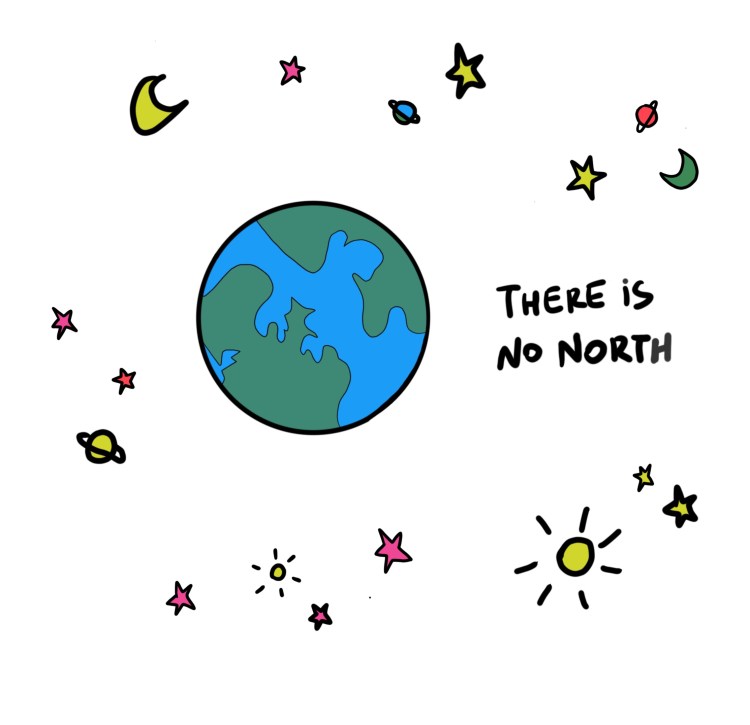
Europe, or North-West Asia:
The making and unmaking of the “center of the world”
“Globalization & Global Histories” (SLIDES/VIDEOS COMING SOON) syllabus/handbook adapted for independent learners -> PDF
SOME EXERCISES
FOR TEACHING AND SELF-TEACHING


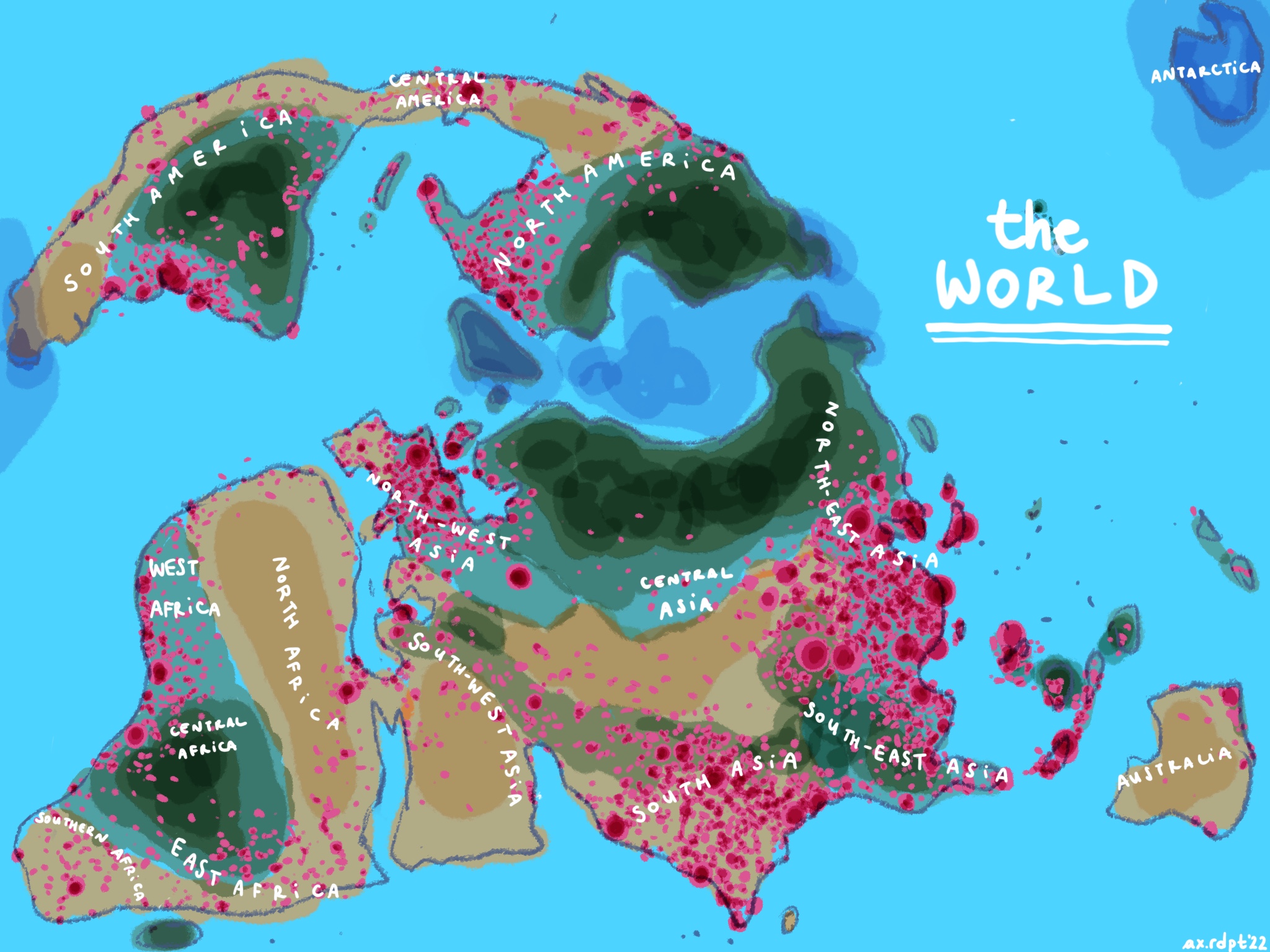
World map exercises: See and download here
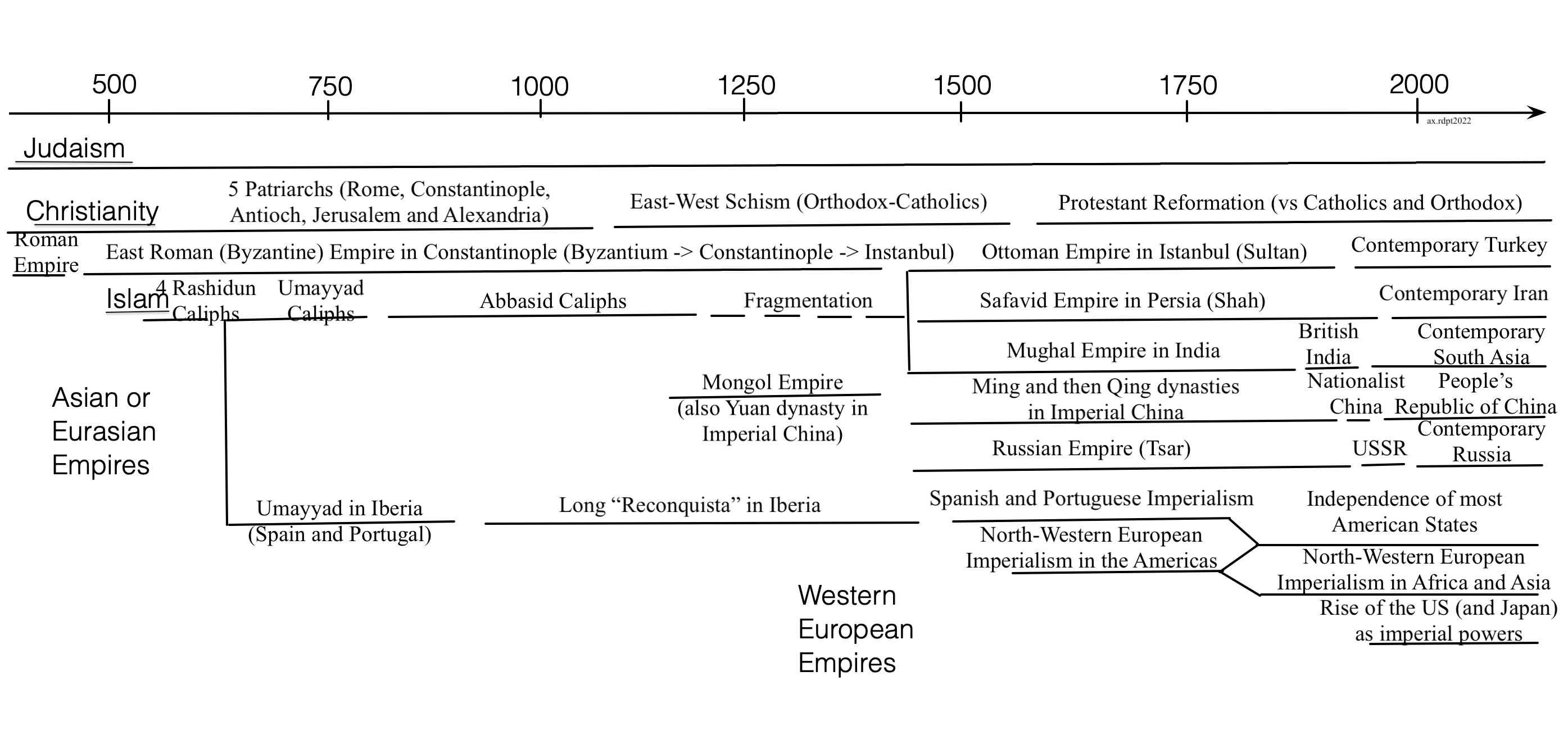
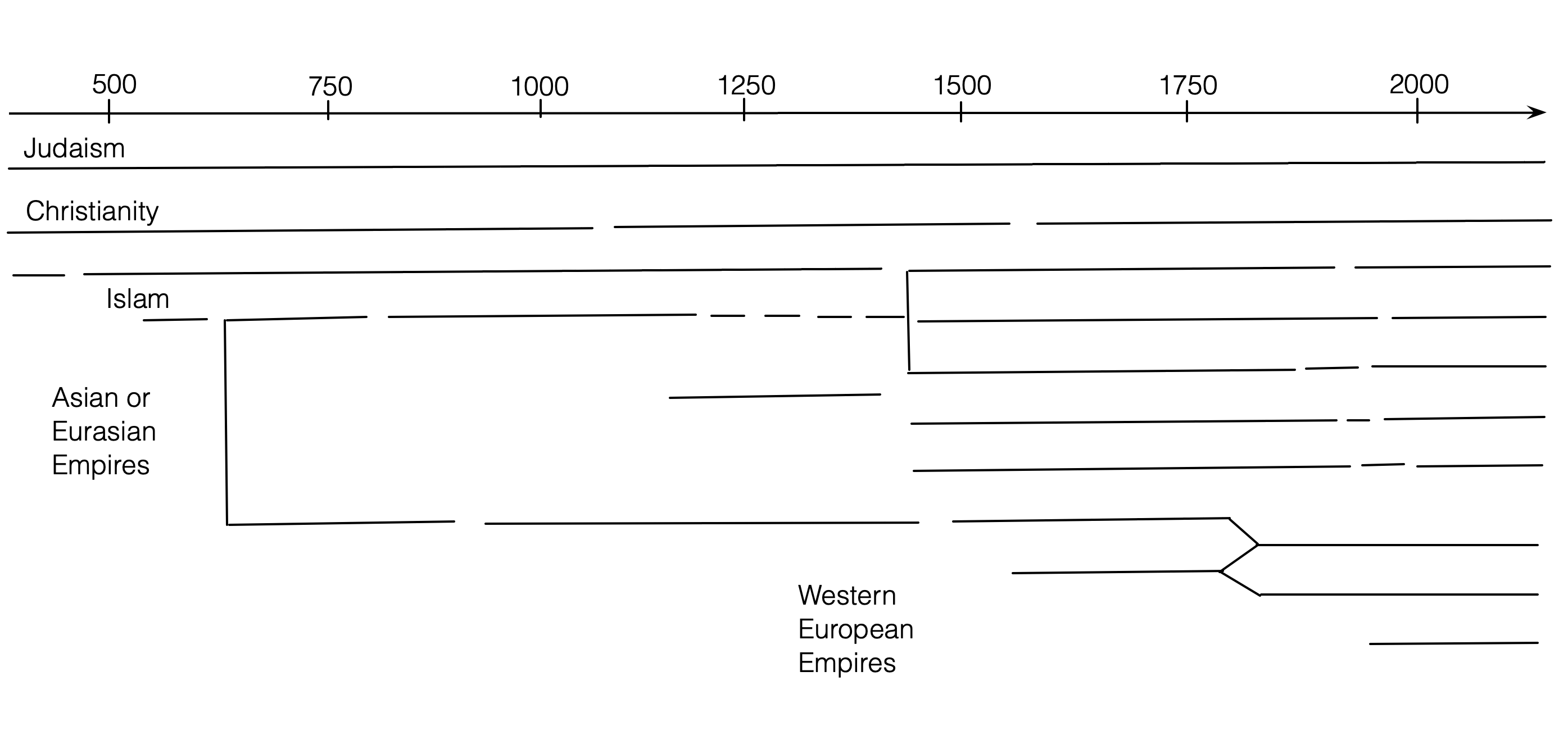
Timelines exercises: See and download here.
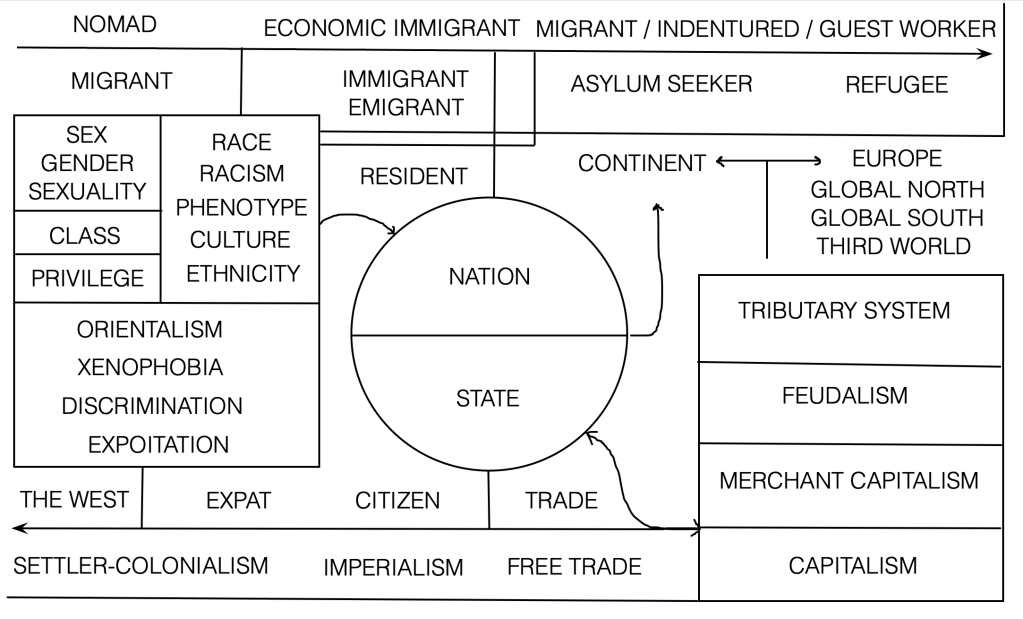
Keywords exercise (Migration and Race)
READING/WATCHING MATERIAL
FOR TEACHING AND SELF-TEACHING
Some relatively simple and accessible texts are linked here to offer some guidance on specific issues (although Stuart Hall’s “The West and the Rest”, the first one, can offer a more complete overview).
Most of them can be approached individually, depending on one’s level of preparation.
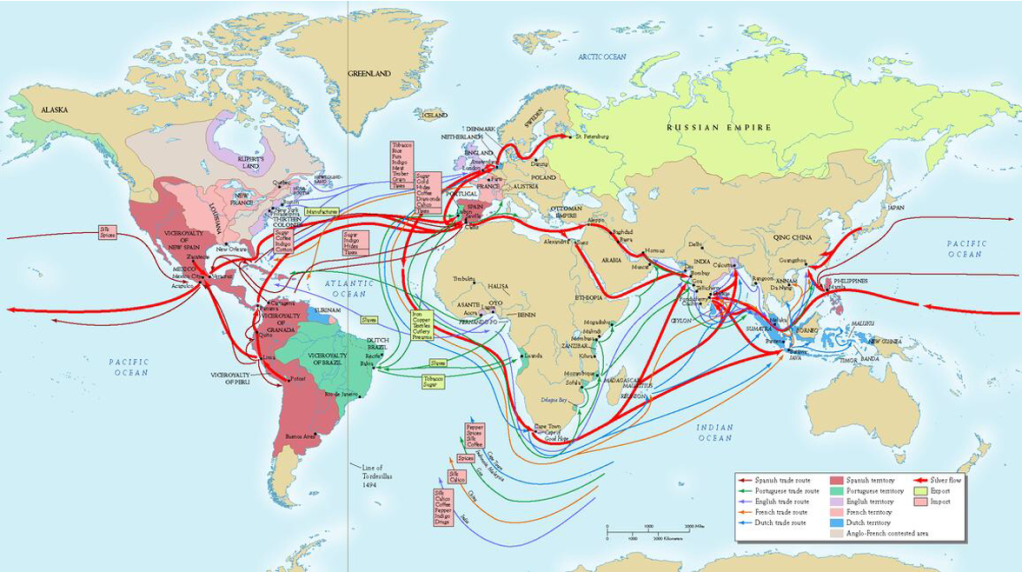
For a simple and accessible history & explanation of European imperialism and its ideas of “civilization”, if one wants nothing too challenging and is going to read only one thing I suggest this one:
-> Stuart Hall’s 1992 “The West and the Rest” (in “Formations of Modernity”, Polity Press), linked -> HERE
For an accessible history & explanation of racist theories:
-> Sven Lindqvist’s 1992 “Exterminate All the Brutes” (The New Press), especially the Part IV, from page 121 till the end, linked -> HERE
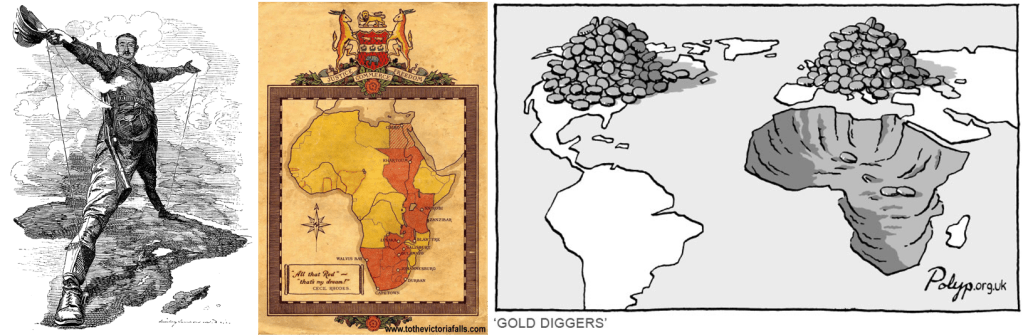
For a critical history of ideas of “white Europe”:
-> Olivette Otele’s 2020 “African Europeans“, introduced in this page -> HERE
For a more dense theorization of the idea of de-centering Europe:
-> Dipesh Chakrabarty’s 2008 “Provincializing Europe” (Princeton University Press), linked -> HERE
For an accessible documentary on the connections between “civilization”, “colonization” and “extermination”:
-> Raoul Peck, Sven Lindqvist and Roxanne Dunbar Ortiz’s 2021 “Exterminate All the Brutes” HBO mini-series, trailer below and also linked -> HERE
-> Raoul Peck’s 2021 interview with Amy Goodman on “Democracy Now!”, linked -> HERE
To compare perspectives on of neoliberal globalization:
- Friedman, Thomas (2007) “While I was Sleeping” in “How the World Became Flat”, The World is Flat, Picador, pp. 1-50 (read pp. 3-16 and 40-50, skim the rest) https://canvas.harvard.edu/files/4971600/download?download_frd=1
- Stieglitz, Joseph (2002) Chapter 3 “Freedom to Choose?” in Globalization and Its Discontents, Penguin, pp. 53-88 (also, if you have time skim Chapter 2, “Broken Promises” pp. 21-52). http://digamo.free.fr/stig2002.pdf
For readings on global inequalities in neoliberal times:
- Peck, Jamie (2010) “Preface” in Constructions of Neoliberal Reason, Oxford University Press, pp. xi-xxi. https://vdoc.pub/download/constructions-of-neoliberal-reason-6onor6ggh880
- Harvey, David (2003) “Accumulation by Dispossession”, in The New Imperialism, Oxford University Press, pp. 137-182; https://socialistregister.com/index.php/srv/article/download/5811/2707/7738
- Tsing, Anna (2007) “Introduction” and “Frontiers of Capitalism”, in Friction: An Ethnography of Global Connection, Princeton University Press, pp. 1-50 (read Introduction, skim Chapter 1). https://politicapueblosindigenas.files.wordpress.com/2020/03/tsing-2004-friction-an-ethnography-of-global-connection.pdf
For critical readings of neoliberal globalization and alternatives to it:
- Saval, Niki (2017) Globalization: The Rise and Fall of an Idea that Swept the World (The Guardian, 14 July 2017) https://www.theguardian.com/world/2017/jul/14/globalisation-the-rise-and-fall-of-an-idea-that-swept-the-world
- Hall, Stuart with Doreen Massey and Michael Rustin (2013) “The Kilburn Manifesto: Our Challenge to the Neoliberal Victory” (The Guardian, 24 April 2013 https://www.theguardian.com/commentisfree/2013/apr/24/kilburn-manifesto-challenge-neoliberal-victory )
Whole edited volume, with collection of articles, accessible for free:
- Hall, Stuart, Doreen Massey and Michael Rustin, eds. (2015) After Neoliberalism: The Kilburn Manifesto (Soundings) https://lwbooks.co.uk/product/after-neoliberalism-the-kilburn-manifesto-free-e-book
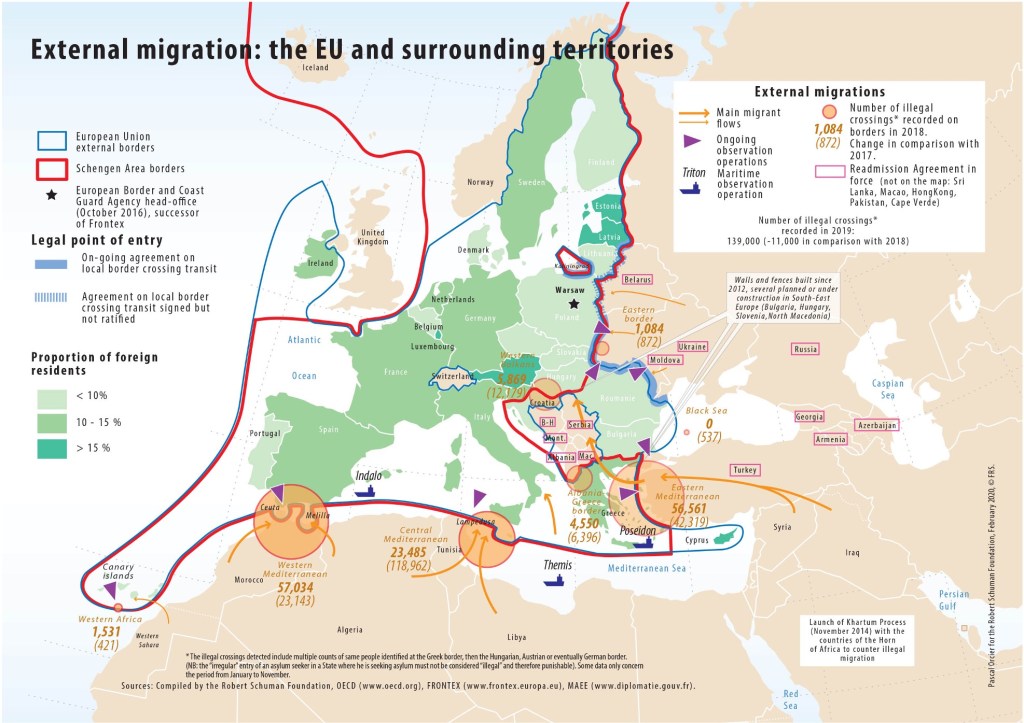
For critical geographies of borders/frontiers and local/global spaces:
- Gregory, Derek (2005) “The Colonial Present”, in The Colonial Present, Blackwell, pp. 1-16. https://www.blackwellpublishing.com/content/bpl_images/content_store/sample_chapter/1577180909/Gregory_Colonial%20Present_sample%20chapter.pdf
- Anzaldua, Gloria ([1987]2007) Borderlands/La Frontera: The New Mestiza, pp. 23-35. http://users.uoa.gr/~cdokou/TheoryCriticismTexts/Anzaldua-borderlands-la-frontera.pdf
- Massey, Doreen (1994) “A Global Sense of Place” in Space, Place and Gender, University of Minnesota Press, pp. 157-173. (Extra reading in this volume: “A Place Called Home”) http://aughty.org/pdf/global_sense_place.pdf
For accessible contemporary discussions of European borders:
-> Nicholas De Genova’s 2017 introduction to “The Borders of Europe” (Duke University Press, pp.1-24), linked -> HERE
-> Martina Tazzioli’s 2018 “Crimes of solidarity. Migration and containment through rescue” (Radical Philosophy 2:1, pp.4-10), linked -> HERE
-> Charles Heller, Lorenzo Pezzani, & Maurice Stierl’s 2017 “Disobedient Sensing and Border Struggles at the Maritime Frontier of Europe” (Spheres. Journal for digital cultures:4 pp. 1-13) linked -> HERE
Fortress Europe:
“Defending” borders against whom and what?
Impossible Landings: Precarity, Populism and Walling in a ‘European’ Refugee Crisis (PhD dissertation) -> PDF
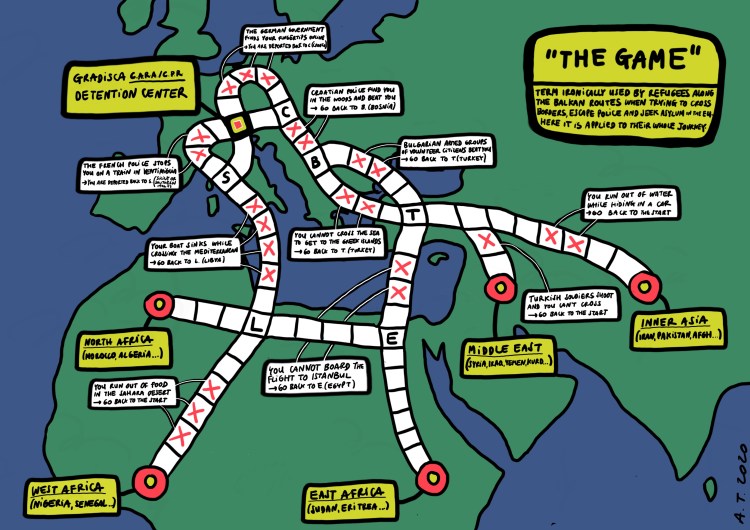
Europe is Not a Continent.
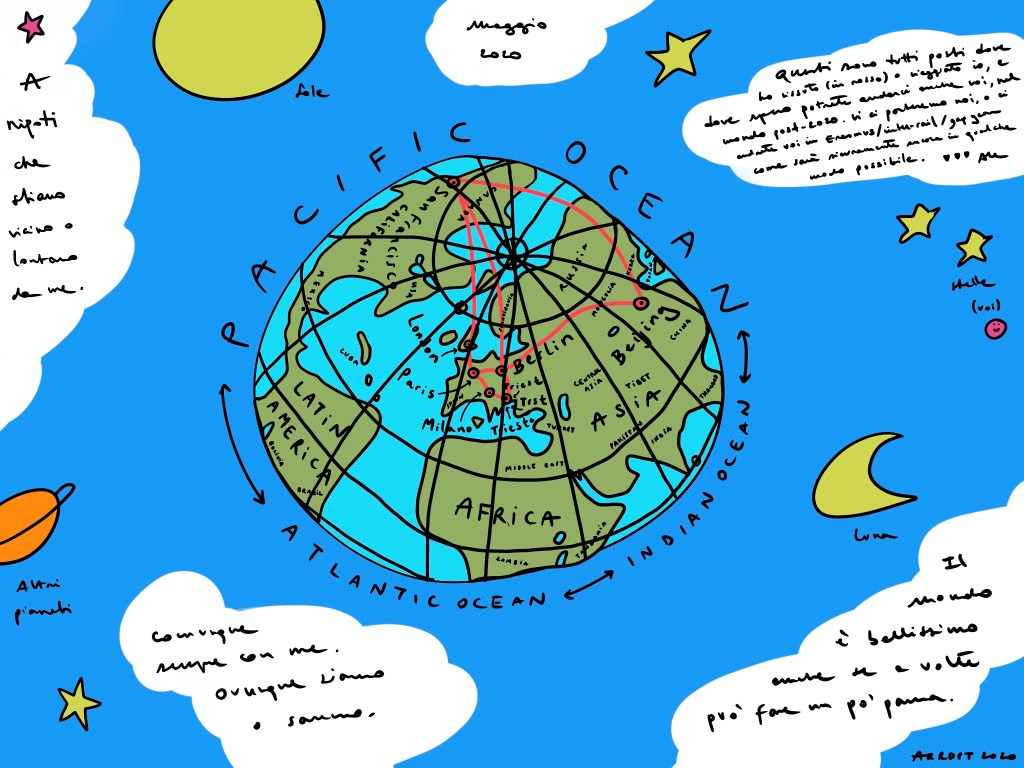

 Europe is Not a Continent